My Gene Cafe Journey So Far
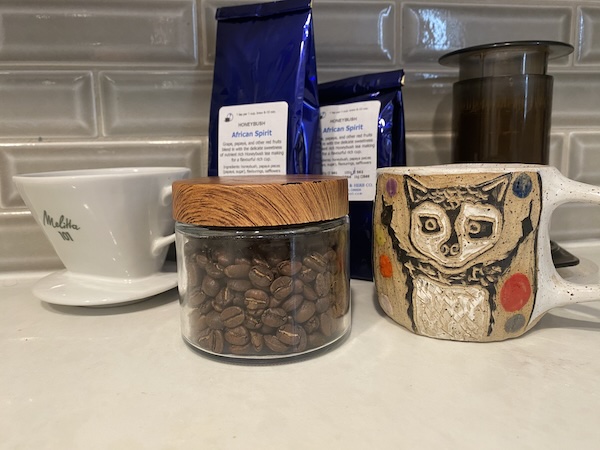 I’m 14 roasts into my home coffee roasting journey with the Gene Cafe and I’m starting to form something of a process. Along with a basic process I am also gaining experience with different bean types and origins. And while I’ve made zero effort understanding coffee roasting from a scientific perspective, I have started to isolate visual, audible, and aromatic cues of how the roast is progressing. The purpose of this blog post is to simply document my process and the results I’ve had with the 5 different types of beans I’ve roasted.
Bean Selection: Hits and Misses
My Gene Cafe came with five 1 lb bags of beans from Pre-Umber. The beans they gave me included:
- Nueva Florida - Peru
- Women in Coffee Blend - Brazil
- West Arsi Grade 2 Natural - Ethiopia
- Aquiares Estate Fully Washed - Costa Rica
- Mandheling Gayo Triple Picked Grade 1 - Sumatra
As a general rule, I’ve so far found the most success with the central and south american beans. Specifically the beans from Costa Rica have turned out consistently good medium to city roasts and were versatile to my admittedly limited knowledge and skillsets. The roasts turned out successful using a simple 2 step roasting process as well as my latest process with many more temperature rests and steps. In other words those beans seemed more beginner friendly.
The Sumatra and Ethiopia beans on the other hand were a different story. Despite trying three different combinations of time and temperature, those beans came out over-roasted on the outside yet under-roasted on the inside. These roasts taught me what flabby and “still green” coffee tastes like. I wish I knew why these beans didn’t do so well. Both even looked different. The beans were smaller and had a blue-ish hue to them.
Time and Temperature Experiments
The first dozen roasts were simple. I started off using a single temperature for the recommended time per the Gene Cafe manufacturer recommendations. As I wasn’t sure what I was looking for I stopped it after the recommended time for a medium roast and the beans came out severely under-roasted and unpleasant.
Progressing to a 3 Step Process
I immediately transitioned away from the Gene Cafe book and took to reddit, where I came up with a 3 step process that I found early success with: 205C Pre-heat, 205C for 6 minutes, 250C for 10 minutes. This process produced acceptable results for medium to city type roasts but led to smoking and scorching of dark roasts.
Finding Consistency with Additional Steps
I moved to a 4 step process as a result of the dark roast learning: 205C Pre-heat, 205C for 4 minutes, 225C for 4 minutes, and 245C until the end of the roast. Adding the additional 225C step led to a bit more consistency with the beans but didn’t seem to impact flavor too much.
Moving beyond Mechanical Time and Temperature
My last couple of roasts have gone very well and I’m using a slightly different approach. I’ve been starting with the 205C Pre-heat and the 205C step to start the beans off. However instead of using rigid time windows, I’m increasing the temperature 10C when the roasting temperature is 5-10C behind the set temperature. I continue that process until I hit my 245C step and then just let the beans ride. In the future I’m going to keep this approach and start adding sensory cues to indicate when to perform the next step or stop the roast. There is a sensory lifecycle in the roast and the beans seem to have visual, audible, and aromatic milestones that help indicate certain points in the roast. I am starting to add these milestones to my documentation and will be able to blog about those milestones in another few months.
Closing thoughts
While I’ve progressed into a process that produces decent coffee, I’m still operating mostly on intuition and trial-and-error. My next goal is to dive deeper into the science behind what’s actually happening—understanding the chemical reactions, moisture loss, and structural changes that create the flavors I’m chasing. More importantly, I want to sharpen my ability to read the roast in real-time using sensory cues. If you’re just starting out with the Gene Cafe, my advice is simple: take notes, trust your senses, and don’t be afraid to mess up a batch or two. Every burnt bean teaches you something.